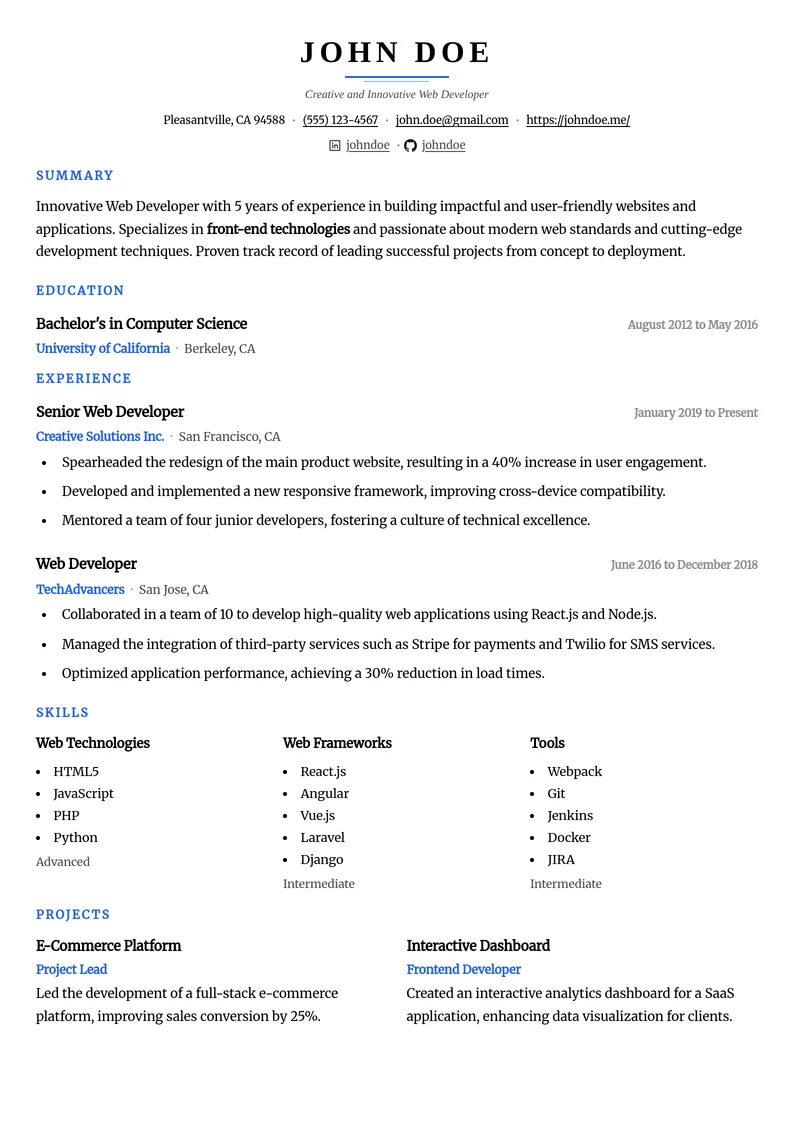
Princeton Resume Template
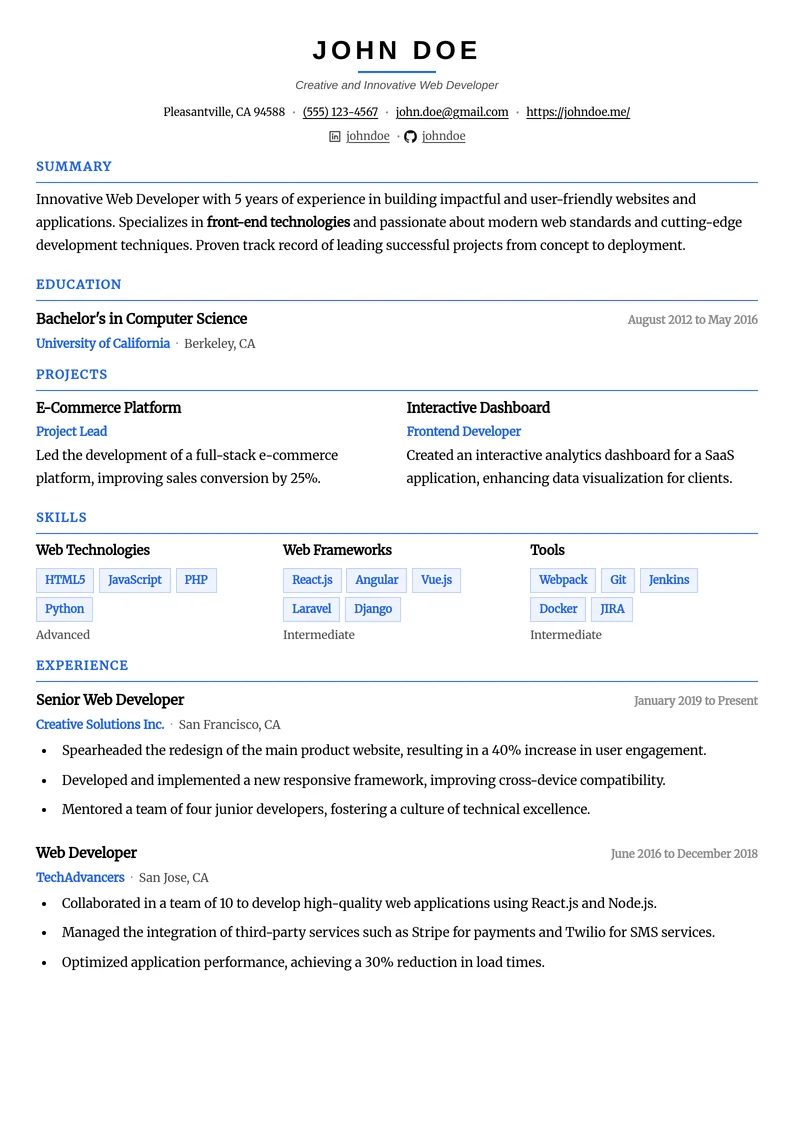
Resume template modeled on Princeton Career Development's ACE bullet framework: Action → Context → End result. One page, single column, ATS-friendly.
Key Takeaways
- Every bullet follows ACE — Action, Context, End result.
- One page, single column, no photo.
- Senior thesis title belongs under Education, named.
- GPA only if 3.5+.
- Skills section at the bottom, grouped by category.
- Vary verbs — Princeton's samples never repeat the same opener.
Introduction
Princeton's Center for Career Development teaches resumes around a single, named structure for every bullet: ACE — Action, Context, End result. The format itself is conservative and shared with most Ivy League career offices (one page, reverse-chronological, no photo), but the bullet discipline is the differentiator. Each line is expected to start with a verb, name the specific situation, and finish with a measurable outcome.
This template gives you the Princeton skeleton and reminds you, in section guidance, to write every bullet through the ACE lens.
Format rules at a glance
- Length
- 1 page
- Bullet framework
- ACE — Action / Context / End result
- Layout
- Single column, reverse-chronological
- Senior thesis
- Named under Education
- GPA
- Only if ≥3.5
- Photo
- Never
Princeton resume format
- Length: one page; two pages allowed only for graduate students or applicants with deep experience.
- Font: a clean serif (Times, Garamond) or sans-serif (Arial, Calibri) at 10–12 pt.
- Margins: 0.5"–1" all sides.
- Layout: single column. Princeton's samples don't use sidebars or columns.
- Color: black body, optional accent for section headings.
- Photo: never.
Personal summary
Princeton's samples don't include a summary section by default. Career switchers can include a 1–2 line profile under the contact block; everyone else should let the evidence speak.
Experience section
Every bullet should follow the ACE pattern Princeton teaches:
- A — Action: a strong past-tense verb that fits the work (Designed, Coordinated, Negotiated, Analyzed).
- C — Context: what you did, including the scale or scope (team of 8, dataset of 12M rows, budget of $40K).
- E — End result: the measurable outcome (reduced churn 14%, secured $250K in funding, accepted into 3 conferences).
Cap each bullet at two lines. Lead each role with its 3–5 strongest ACE bullets and order them by impact, not chronology.
Education and certifications
Education leads the page through graduation and stays there for several years after.
- Princeton University, then degree (e.g. A.B. in Economics), then graduation date.
- Include GPA if 3.5 or above.
- Senior thesis title sits under the degree line — Princeton CCD specifically encourages naming it.
- Honors, awards, and certificates (e.g. Finance, Computer Science) get sub-entries.
Skills guidance
Skills sit near the bottom of the page. Group them — Languages, Technical, Laboratory, Certifications — and list specific tools. Princeton CCD's samples avoid bar charts and self-assigned proficiency stars.
Mistakes to avoid
- Bullets that name an action but not the result. The 'E' in ACE is non-negotiable.
- Wall-of-text bullets longer than two lines.
- Listing a senior thesis title under "Awards" instead of Education.
- Using a photo or graphical header.
- Identical verbs throughout — vary them.
Frequently Asked Questions About Princeton Resumes
Every bullet should make three things visible: the Action you took (verb), the Context that gives it scale (team size, dataset, scope), and the End result (a measurable outcome). Princeton CCD treats this as the core resume skill.
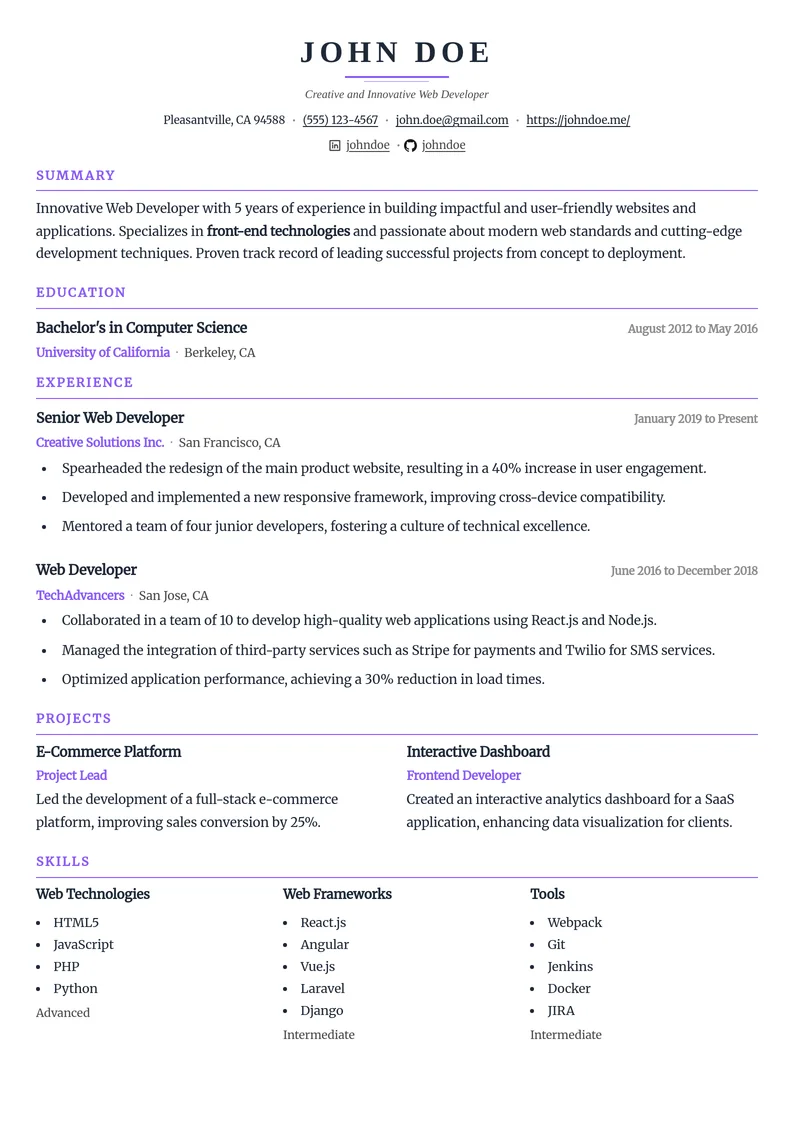
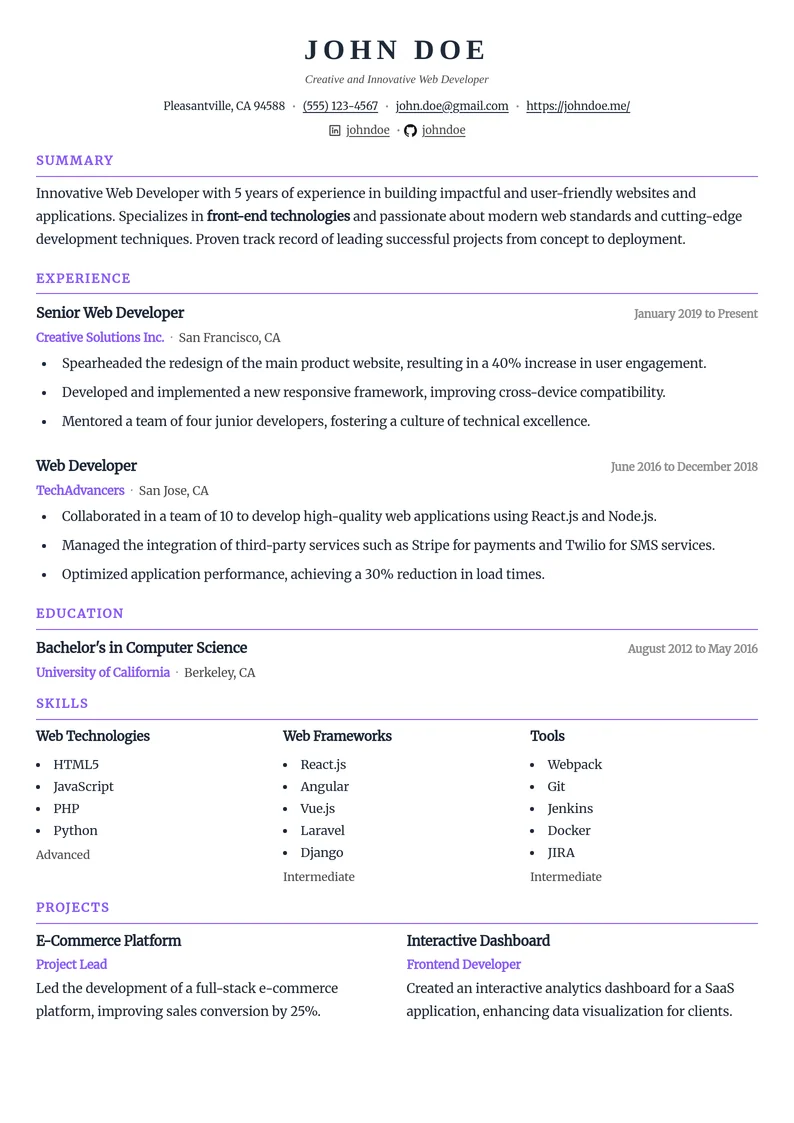
More United States templates4
View all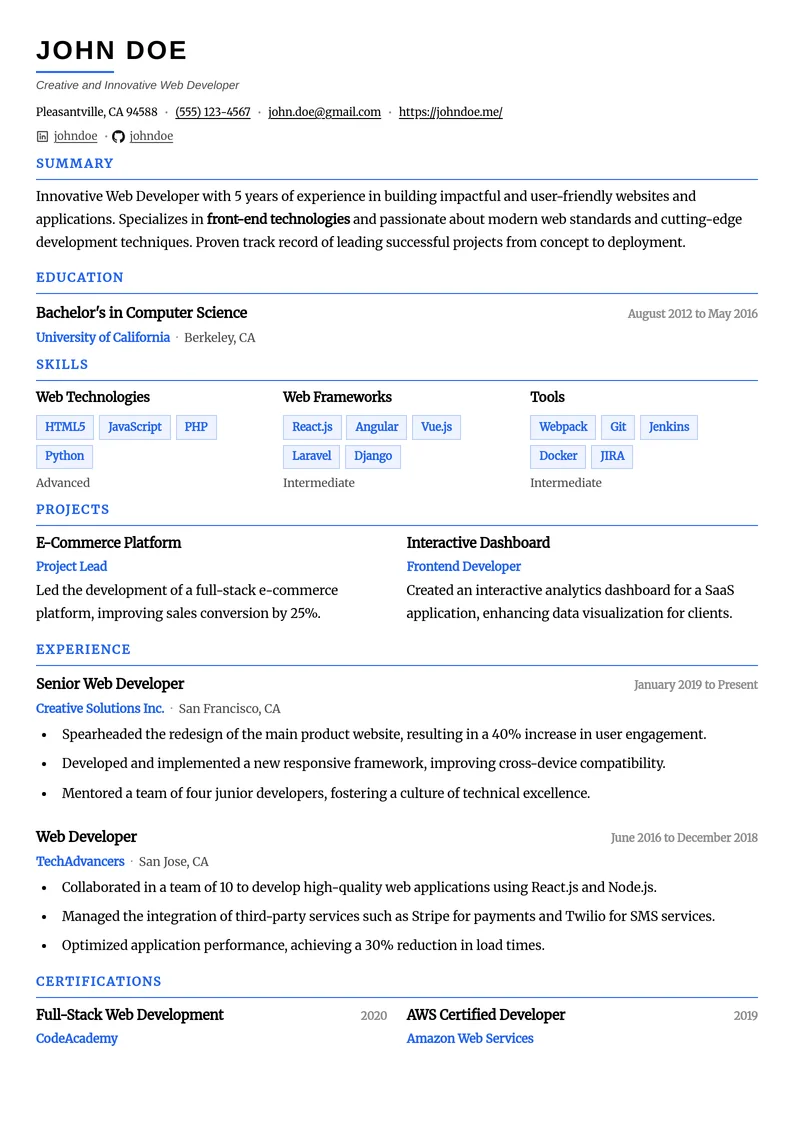
Disclaimer
Based on public career-center best practices. Not affiliated with or endorsed by Princeton University.
Source: careerdevelopment.princeton.edu