Introduction
Stanford CareerEd publishes the strictest formatting guide of any of the elite US schools. The handout they distribute to students is unusually specific about margins, font choice, and section ordering — and the differences from a Harvard or Yale resume are deliberate. 1" minimum margins on every side is the most-cited rule, but the entire document is built around generous whitespace and a calm typographic rhythm.
This template gives you that rhythm out of the box: one page, single column, generous margins, and section headings that don't fight the body copy for attention.
Stanford resume format
Stanford's career-education handout pins down each parameter.
- Length: one page; CareerEd flags any two-page resume as needing justification.
- Font: Calibri or Arial preferred, 11–12 pt body, 14–18 pt name.
- Margins: at least 1" on top, bottom, left, and right. Don't reduce them to fit more text.
- Line spacing: single, with one blank line between major sections.
- Color: black ink with optional accent color for headings.
- Photo: never.
Personal summary
CareerEd doesn't include a summary block in its sample resumes, but it allows a 1–2 line "Profile" for career changers. Keep it short, specific, and grounded in evidence the rest of the page will confirm.
Experience section
Stanford's handout teaches a problem → action → result bullet pattern, and emphasizes that bullets should never read like a job description.
- Open every bullet with a past-tense action verb (use present tense only for your current role).
- State the problem or context briefly, then the action, then the result with a metric.
- Cap each bullet at two lines.
- Pick 3–5 bullets per role; the strongest first.
- Avoid responsibility-style phrasing ("Responsible for…", "Duties included…").
Education and certifications
Education is your top section through graduation and for two to three years after.
- Stanford University, then degree, then quarter/year of graduation.
- Include GPA only if 3.5 or higher.
- Senior project, honors thesis, or distinction sits below the degree line.
- Study abroad and Stanford-in-Washington appear as sub-entries.
Skills guidance
The Skills section sits near the bottom of the page. Group entries by category (Technical, Languages, Certifications) and list the specific tool, framework, or language. Stanford CareerEd avoids bar charts and 1-to-5 ratings in its samples — they don't tell a recruiter anything verifiable.
Mistakes to avoid
- Shrinking margins below 1". CareerEd is unusually firm on this.
- Using a decorative font (Comic Sans, Georgia in italic, hand-script). Stick to Calibri or Arial.
- Listing high-school work after sophomore year.
- Vague verbs ("Worked on…", "Helped with…"). Be specific.
- Inflating self-rated skill levels.
Career coaching and hiring-side experience, written into practical resume and job-search advice.
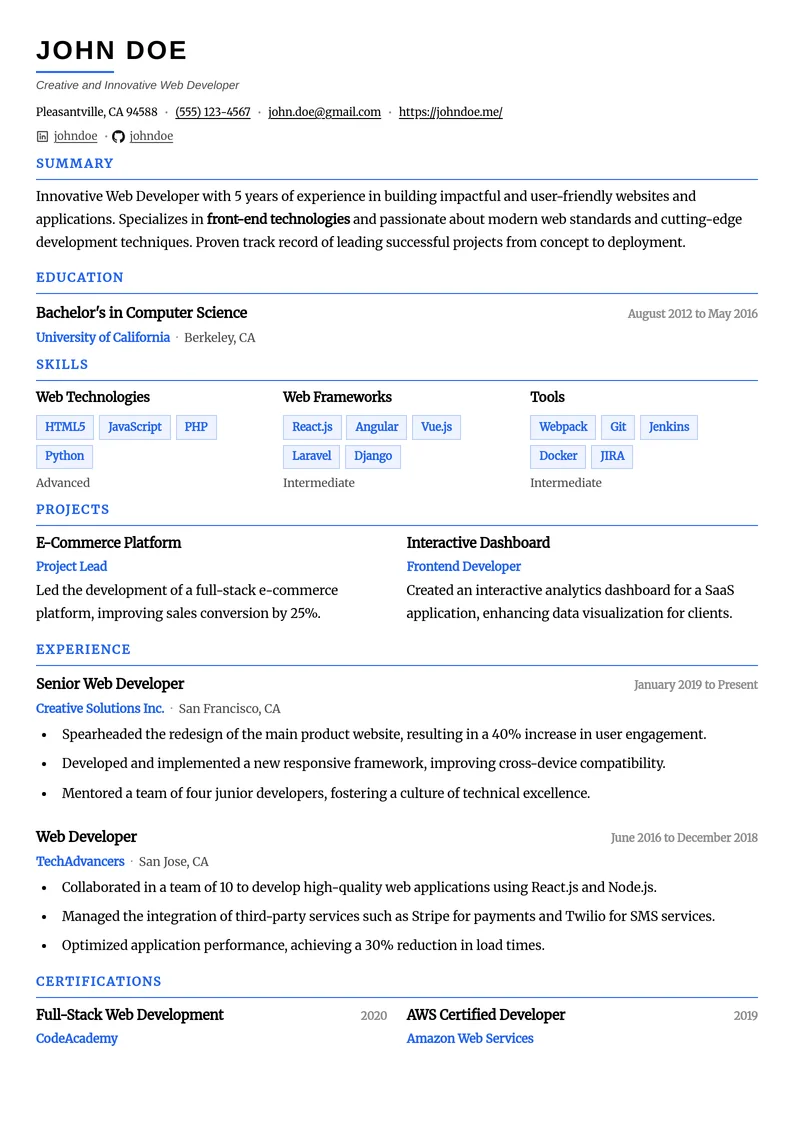 United StatesCaltech resume template
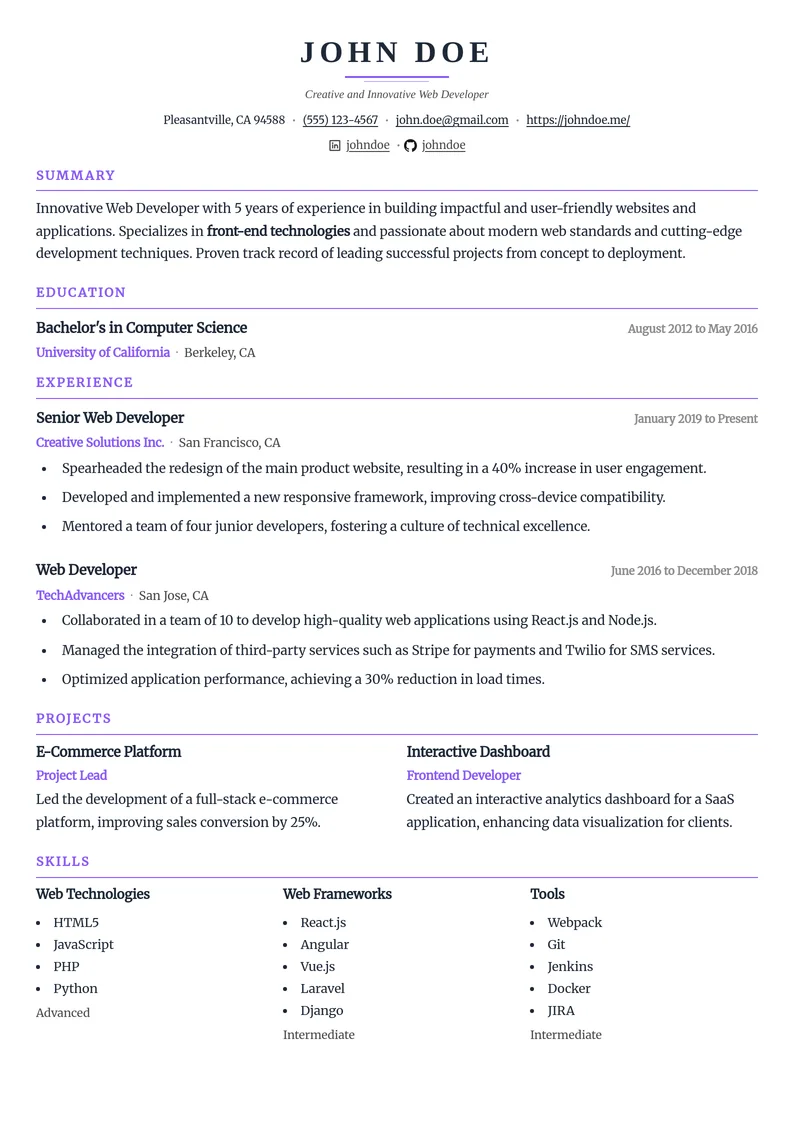 United StatesColumbia resume template
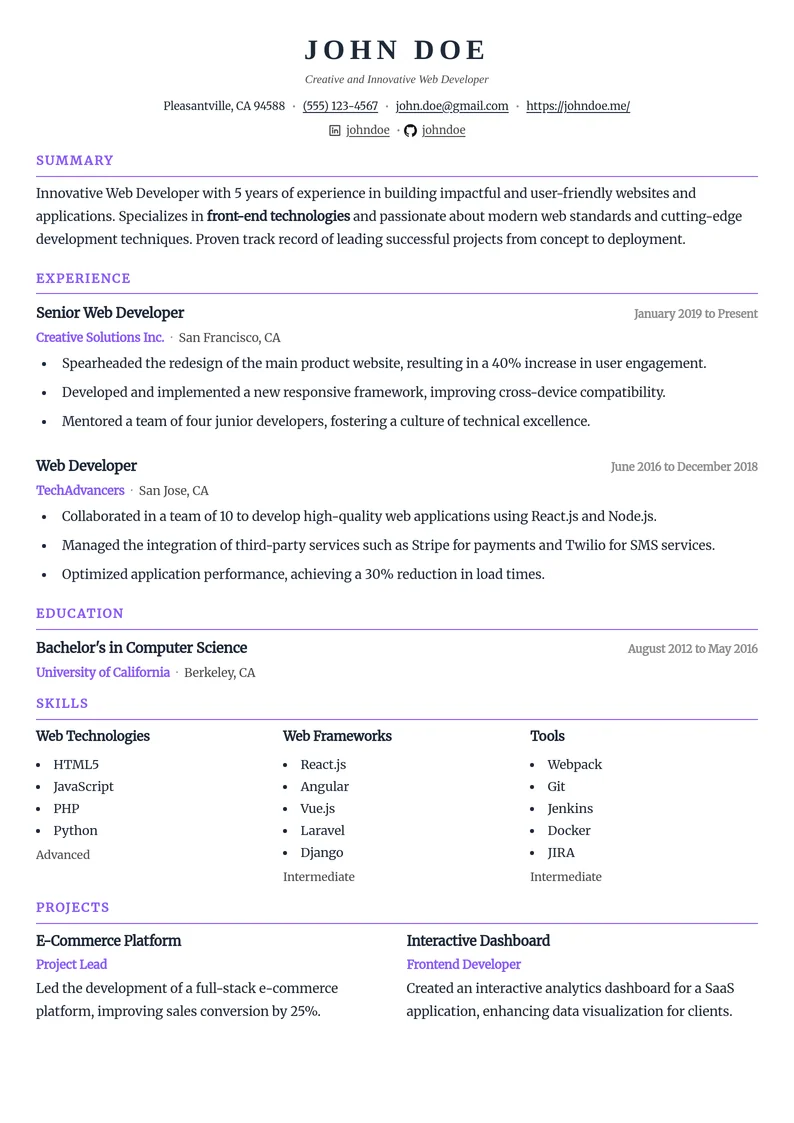 United StatesHarvard resume template
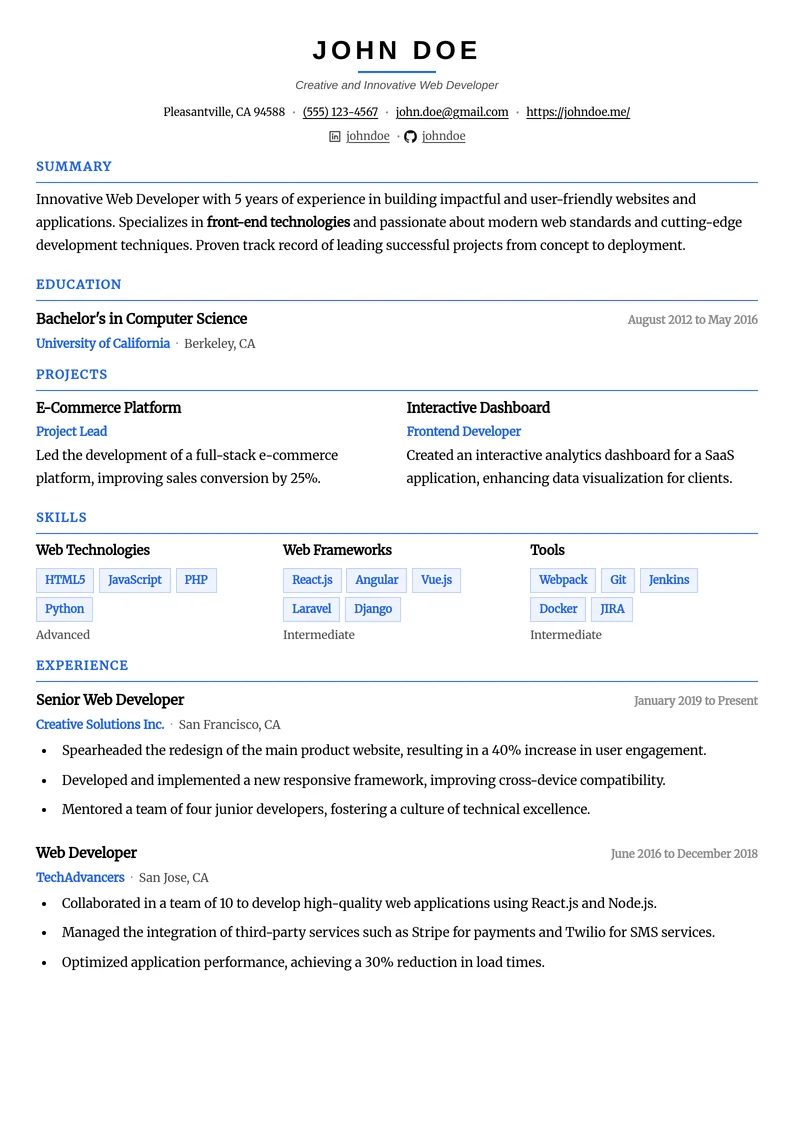 United StatesMIT resume template
Based on public career-center best practices. Not affiliated with or endorsed by Stanford University.
Source · careered.stanford.edu