Key takeaways
- Two tracks — employer CV (1–2 pages) and academic CV (longer).
- College sub-line under University.
- Personal Profile at the top, 2–4 lines.
- CAR-aligned bullets emphasizing transferable skills.
- Right-aligned dates; no photo or DOB.
- Predicted/final classification on the degree line.
Format rules at a glance
- Document type
- CV, not résumé
- Tracks
- Employer CV + Academic CV (separate)
- Length (employer)
- 1–2 pages
- Personal Profile
- Recommended, 2–4 lines
- College
- Sub-line under University
- Photo, DOB
- Never
Introduction
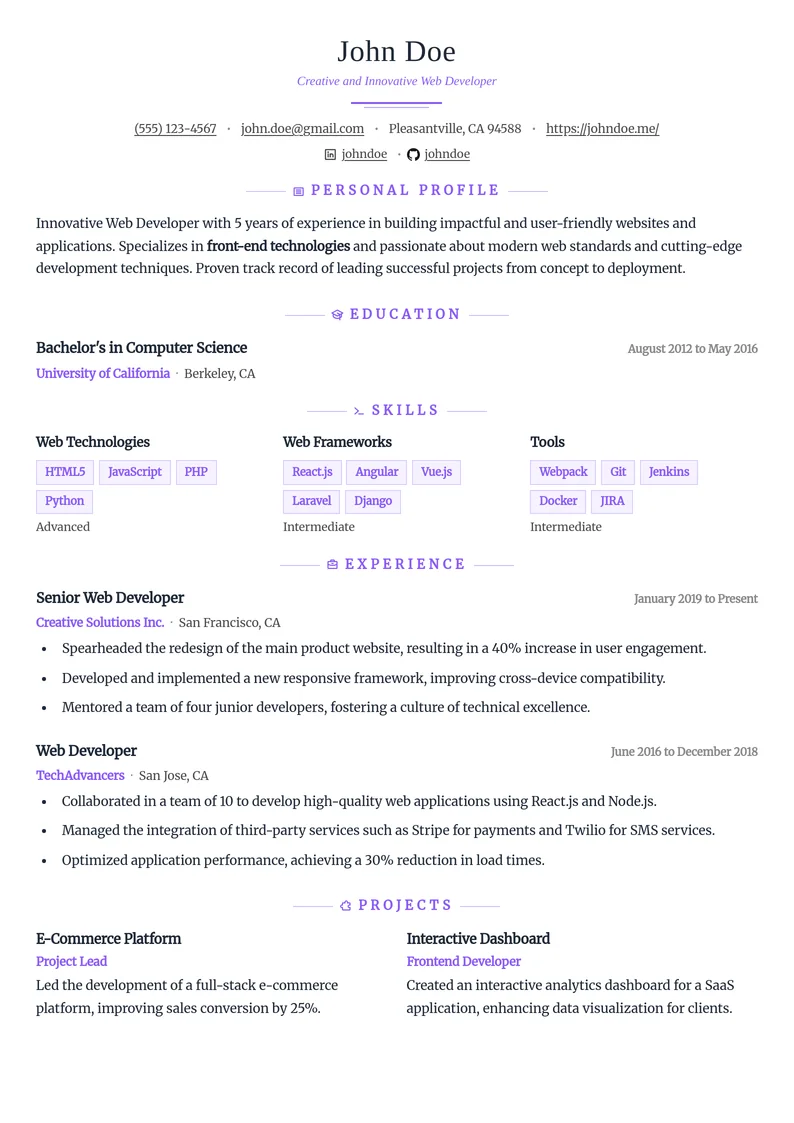
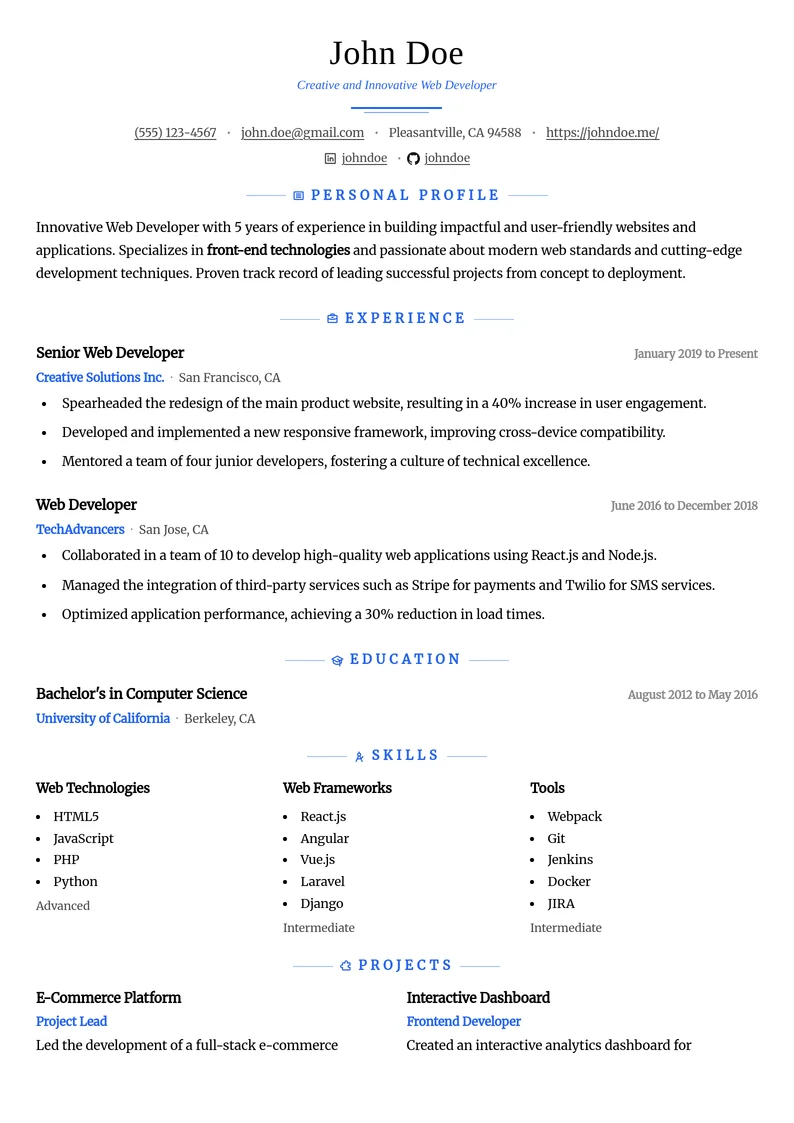
The Cambridge Careers Service teaches two distinct CV tracks: one for undergraduates and Masters students (1–2 pages, employer-facing, transferable-skills focused) and a longer academic CV for PhDs and postdoctoral researchers. Both share the UK conventions Cambridge has standardized — single column, right-aligned dates, no photo, no personal details, and a college sub-line under the University.
This template gives you the employer-track skeleton. It works for graduate schemes, professional applications, and the first job after Cambridge — and it converts cleanly to an academic CV later by extending the Education and adding publications.
Cambridge resume format
- Length: 1–2 pages for graduate scheme and professional applications. Academic CVs grow with the career.
- Font: Arial, Calibri, or a clean serif at 10–12 pt.
- Margins: 1.5–2 cm all sides.
- Dates: right-aligned, Month Year format.
- Photo, DOB, marital status, nationality: none.
- Layout: single column.
Personal summary
A short Personal Profile is recommended for employer CVs — 2–4 lines under your contact block. The Cambridge Careers Service suggests framing it around: your current programme, your specialism or interests, and the type of role you want next.
Experience section
Cambridge teaches a flexible CAR/STAR-aligned bullet — Context, Action, Result — and emphasizes that bullets should reveal transferable skills (analysis, communication, leadership) drawn from any kind of activity, not just paid work.
- Lead with a verb in the correct tense.
- Give scope: scale, audience, stakes.
- Close with a measurable or visible result.
- Mix paid work, internships, college roles, and substantial extracurriculars in the same Experience section if relevant.
- Cap each bullet at two lines.
Education and certifications
Education sits at the top while you are at Cambridge and for the first year or two after.
- University of Cambridge — then degree (e.g. BA (Hons) Natural Sciences or MEng Engineering), then graduation date.
- College sub-line (Trinity, King's, Newnham, etc.).
- Tripos parts and module/Tripos paper titles can sit beneath for current students.
- Predicted or final classification (First, 2:1) belongs on the degree line.
- A-Levels and GCSEs in compact form, removed after 2–3 years post-graduation.
Skills guidance
Skills sit toward the end of the employer CV. Group entries — Technical, Laboratory / Research, Languages (CEFR levels), Certifications. List specific tools and methods rather than self-rated stars or bars.
Mistakes to avoid
- Submitting a US-style résumé. UK employers expect a CV, not a résumé — terminology and format both.
- Omitting the college. Cambridge employers expect to see it.
- Merging the employer CV and the academic CV. They have different audiences.
- Adding a photo, DOB, or nationality.
- Listing "References available on request." Either name your referees at the end or skip the section.
Frequently asked questions about the Cambridge resume format
Yes — for PhD applications, postdoctoral posts, and academic grants. The employer CV is for graduate schemes, professional jobs, and most non-academic applications. The Cambridge Careers Service treats them as distinct documents.
Yes — as a sub-line under the University. It's part of your Cambridge identity and UK recruiters expect to see it.
Use the Tripos label that's actually printed on your transcript (e.g. <em>Part IIA Engineering Tripos</em>). Underneath, list 3–5 papers or modules that align with the role you're targeting.
Yes, especially for graduate scheme applications — Cambridge Careers Service places significant weight on college and society roles as evidence of leadership and teamwork. Treat them as you would paid roles, with CAR bullets.
Career coaching and hiring-side experience, written into practical resume and job-search advice.
Based on public career-center best practices. Not affiliated with or endorsed by University of Cambridge.
Source · careers.cam.ac.uk