Key takeaways
- Personal Profile is mandatory — 2–4 lines at the top.
- Skills sits high on the page, grouped by stack.
- 1–2 pages, single column, ATS- and AI-safe.
- STEM bullets cite specific tools, methods, and measurable outcomes.
- Right-aligned dates; no photo or DOB.
- Final-year project named with supervisor.
Format rules at a glance
- Length
- 1–2 pages
- Personal Profile
- Mandatory, 2–4 lines
- Skills position
- High on page, after Education
- Font
- Arial/Calibri 10–12 pt
- ATS/AI safety
- Single column, no tables, no boxes
- Photo, DOB
- Never
Introduction
Imperial College's Careers Service teaches a UK CV optimized for science and engineering employers. The most distinctive features: a Personal Profile at the top of every CV, an explicit recommendation that the document be both ATS-friendly and AI-screening-friendly, and a Skills section that surfaces the technical stack high on the page rather than burying it at the end.
This template gives you that STEM-CV skeleton, with Skills positioned to be visible at first glance and a Personal Profile slot that frames the rest of the document.
Imperial resume format
- Length: 1–2 pages.
- Font: Arial or Calibri, 10–12 pt body, 12–14 pt name. Sans-serif is preferred for ATS-safety.
- Margins: 1.5–2 cm.
- Dates: right-aligned.
- Layout: single column, no tables, no text boxes — both confuse ATS and AI parsers.
- Photo, DOB, marital status: none.
Personal summary
The Personal Profile is mandatory in Imperial's guidance. 2–4 lines, third person without your name. Mention:
- What you study and where you are in the programme.
- Your technical specialism (e.g. computational fluid dynamics, structural biology, quantitative finance).
- The type of role you want.
Imperial Careers explicitly suggests writing the Personal Profile last, after the rest of the CV exists, so the framing matches the evidence.
Experience section
Imperial teaches a Context-Action-Result bullet structure with a STEM emphasis — every bullet should ideally name a method, a tool, or a measurable outcome.
- Open with a verb that fits engineering or scientific work (Designed, Modelled, Implemented, Validated).
- Name the technique or tool (Python, COMSOL, LabVIEW, fMRI, SEM).
- Quantify outcome — accuracy, speedup, sample size, cost reduction.
- For research roles, name the PI and the group.
- Treat substantial project work (UROP, group projects, hackathons) as Experience if the technical content is there.
Education and certifications
Education leads the CV through graduation and for the first year or two after.
- Imperial College London, then degree (e.g. MEng Aeronautical Engineering), then graduation date.
- Final classification (predicted or actual).
- Final-year project or thesis title, with supervisor.
- Relevant modules in a single comma-separated line, tailored to the target role.
- A-Levels / IB / equivalent in compact form for current students.
Skills guidance
Skills is a visible section on an Imperial CV — typically directly under Education or the Personal Profile so a recruiter sees the stack within the first quarter of the page. Group entries:
- Programming / Software: languages and tools you've shipped real work with.
- Engineering / Lab: instrumentation, simulation packages, fabrication.
- Languages: CEFR levels (A2, B2, C1) rather than self-rated fluency.
- Certifications: e.g. AWS, PRINCE2, AMBA chartership progress.
Mistakes to avoid
- Skipping the Personal Profile. Imperial Careers treats it as a baseline expectation.
- Burying Skills at the bottom. For STEM, the stack should be visible high on the page.
- Generic verbs ("worked on", "helped with"). Engineering recruiters scan for specificity.
- Tables and text boxes. Imperial flags these as ATS- and AI-unfriendly.
- Listing modules you didn't engage with. A short, targeted list beats an exhaustive one.
Frequently asked questions about the Imperial resume format
Imperial Careers Service explicitly recommends a Personal Profile on every CV because engineering and science recruiters often screen via AI/ATS before human review, and the Personal Profile gives those systems a clear framing paragraph with relevant keywords.
If the technical content is substantial — independent ownership, clear results — treat it as Experience. Brief, course-driven projects can sit under a separate Projects section.
Single column, standard fonts (Arial/Calibri), no tables, no text boxes, no header/footer for contact info, predictable date format, and explicit mention of the tools/methods named in the job description.
If you've started progress toward chartership and the target employer values it, include it under Skills or Certifications. Imperial Careers treats it as a meaningful signal for engineering employers.
Career coaching and hiring-side experience, written into practical resume and job-search advice.
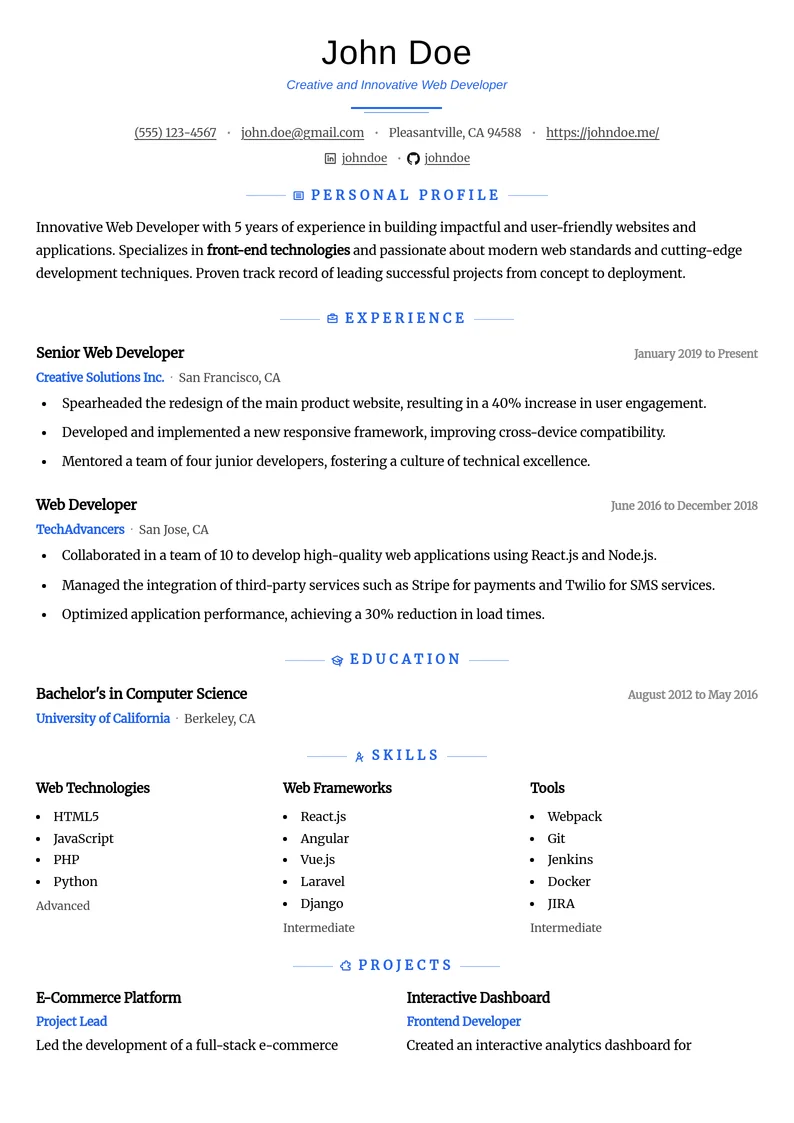
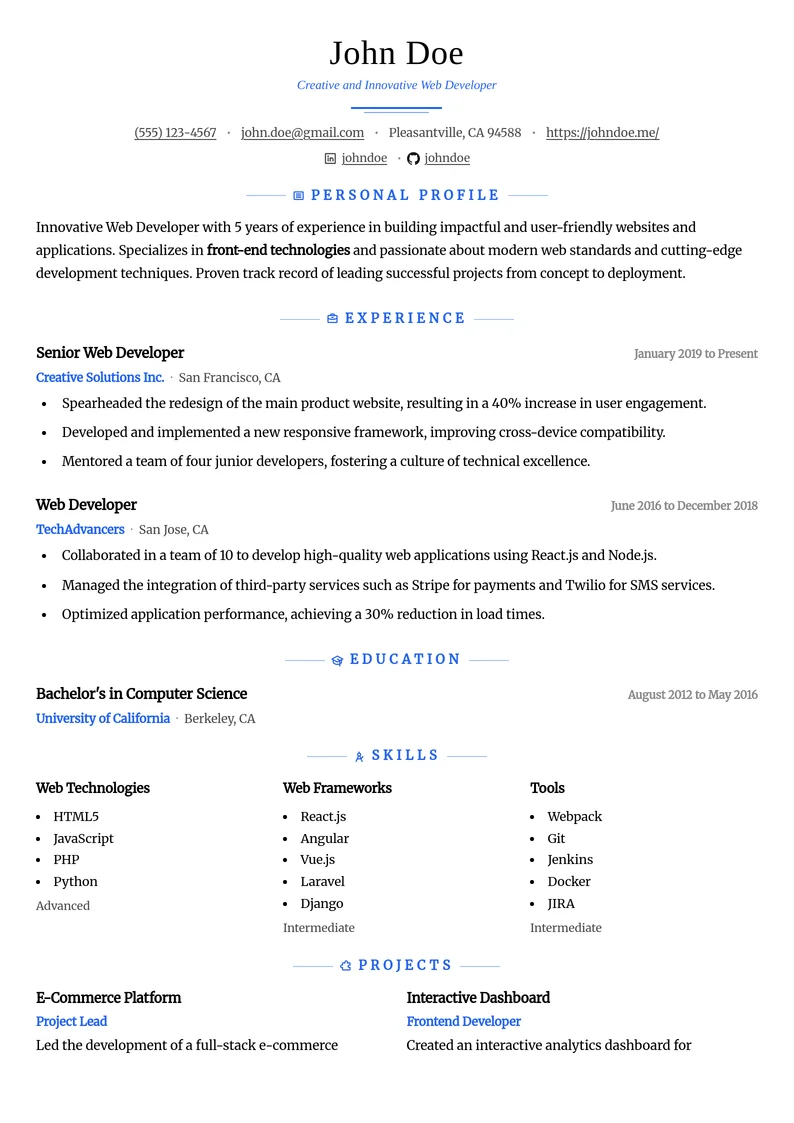
Based on public career-center best practices. Not affiliated with or endorsed by Imperial College London.
Source · imperial.ac.uk